Wednesday, September 12, 2012

The Mountains of Laos

From the entrance of the squad tent, Jeff could see the mountains of Laos. Brother Jeff Sharlet was in the narrowest, most northern part of South Vietnam serving at an American base near the small ville of Phu Bai in 1964. From where he stood, the South China Sea was to his left; to his right was the rugged Annamite Range as far away as Laos, maybe 50 miles as the crow flies.
 
Jeff was an American ‘military advisor’, one of 16,000 sent mostly by President Kennedy to help South Vietnam (SVN) quell a guerrilla insurgency guided from Communist North Vietnam (NVN).  At that point it wasn’t much of a war, what political scientists called a low-intensity conflict with hard fighting between the SVN Army (ARVN) and the insurgents in the far south in the Mekong Delta as well as occasional hit and run skirmishes in the Central Highlands, but relative quiet around Phu Bai not far below the DMZ and the border with NVN. From Hanoi’s strategic perspective, the action was in the more populous southern part of the country in and around Saigon, the capital.
 
Phu Bai was a very small  outpost relative to regular military bases. Jeff’s outfit was called Detachment J, a subunit of the 3rd Radio Research Unit (RRU), the euphemism for the intelligence-gathering facility tucked away behind barbed wire at Saigon’s Tan Son Nhut Airport. The 3rd RRU and Det J were part of the Army Security Agency (ASA), an independent communications intel agency nominally within the Army, but actually under aegis of the National Security Agency (NSA) in Washington. In effect, Phu Bai was NSA’s listening post in closest proximity to NVN.
 
It was an ASA installation, but the base also accommodated a much smaller Marine unit doing much the same thing. ASA intercepted NVN military land communications while the Marines’ beat was the small coastal NVN Navy’s ship to shore and ship to ship communications. Both units were made up of Vietnamese linguists like Jeff, Morse code operators, cryptographers, security guards. and the usual logistical personnel.
 
Marine corporal Dave Reinhardt was in the first Vietnamese class at Army Language School in Monterey CA; he’d been assigned to Phu Bai with the 1st Composite Radio Company, a unit attached to the 3rd RRU, the year before Jeff arrived. Phu Bai was not far from the ‘street without joy’, a stretch of highway named by the French who had been frequently ambushed there during the First Indochina War (1946-54).* Dave described the area as peaceful in 1963, with little evidence of the insurgent Viet Cong (VC) – except for road mines. The terrain was mostly flat with little vegetation. Right across from the base was an old French airstrip, the control tower abandoned, but with a long enough runway in good condition for large US military aircraft to land.
 
A year later in ’64, the Pentagon (DOD) began taking a greater interest in remote Phu Bai. Up to that point, the Central Intelligence Agency (CIA) had been responsible for running ‘black ops’, clandestine operations, against NVN, although most of its efforts had ended in failure. Defense Secretary McNamara decided DOD could do a better job and lobbied the White House. In mid-January President Johnson (LBJ) authorized OPLAN 34A, a comprehensive plan described as “a wide variety of sabotage and psychological operations [psy ops] against North Vietnam.”** The centerpiece would be to continue cross-border commando infiltrations, which DOD took over from the CIA on February 1st.
 
Coincidentally, that was the day after General Khanh carried out a coup against the military junta that had overthrown President Diem several months earlier. As soon as the US got an inkling the coup was underway, Jeff and a contingent of linguists were sent back to Saigon from their home base in the Philippines, but since the coup was quick, bloodless, and successful there was nothing for them to do. However, DOD needed to rapidly strengthen the small ASA detachment at Phu Bai, which would be tasked as communication liaison with SVN commandos infiltrated into NVN as well as for psy ops, so orders were cut for Jeff and a dozen other ASA personnel to report to Det J.
 
Arriving at Phu Bai, Jeff found a ramshackle jumble of low buildings, high antennas, communication vans, large squad tents, a truck park, and construction sites in various stages of completion. The whole assemblage was surrounded by barbed wire with a single gate manned by a couple of ASA security guards armed with .45s. The topography was pretty barren except for a small hill of just under 600’ used for additional antennas. Outside the wire was an old, overgrown Vietnamese cemetery, most likely the graveyard for the nearby ville of about 7,000 inhabitants.


Construction at Phu Bai base, 1964
 
The nondescript buildings housed the communications and intercept equipment as well as the work areas for the lingys, crypts, and ditty boppers, as the ASA guys called their specialties. Most of them were billeted in the large tents set on wooden platforms with space for eight cots with mosquito netting and footlockers. Wooden walkways linked the tents to other parts of the base. Given the heat, humidity, and flying insects of Southeast Asia, at night the side flaps were usually up and mosquito nets down. Jeff and his bunkmates posted a sign out front reading:

CANVAS CASTLE MOTEL – 3
·         Air conditioning
·         Wall to wall plan
·         Scenic view
·         Floor show nightly
NO VACANCY
 
Amenities were minimal. There was an enlisted men’s club with cheap booze and a jukebox; a small PX, or military store that sold liquor, beer, and toothpaste; a one-chair barber shop in a wooden hut, a tent with some workout equipment; and the mail room. The touchdown of the C-123 Caribou mail plane was a daily event. Less welcome were the nearby ARVN heavy artillery unit firing randomly and thunderously day & night and the constant hum of powerful diesel generators powering the base’s equipment—both of which took some getting used to, as Jeff wrote home.

The classified work required attention, but otherwise formal military duties were at a minimum. Given the steamy climate, the standard uniform would barely qualify as military-informal. Occasionally the men were trucked outside the compound to a rifle range to practice firing their carbines. When someone asked why the truck bed was covered with sandbags, the answer was, ‘road mines’. Otherwise, no ammo was handed out, probably as a safety measure, since few if any ASA troopers had weapons experience.

Jeff worked alongside a congenial group of young college guys like himself—Ralph Adams, John Buquoi, Bill Jernigan, Peyton Bryan among others. Ralph Adams was the best linguist and served as the base commander’s (CO) interpreter for administrative business with local Vietnamese. Later Ralph would make a career with the NSA, rising to executive director before retirement.

 
Ralph Adams off duty talking to a Vietnamese boy

As the CO’s aide, Ralph had use of a jeep he’d occasionally loan to Jeff and his buddies. Off duty they’d don civvies and roam the countryside – north to nearby Hue on the coast, south over the picturesque Hai Van (Sea Cloud) Pass to Danang, and occasional afternoons at white sand beaches on the South China Sea.

By late May ’64, Jeff finished his Vietnam tour and headed back to the States, to ‘the world’ as GIs would later say. Not long afterward, a major event in what became the American war in Vietnam occurred. A US destroyer on an electronic surveillance mission in the Gulf of Tonkin cruised close to the NVN coast well within the 12-mile international waters limit, drawing the attention of NVN torpedo boats. A brief sea skirmish occurred.

The destroyer escaped unscathed thanks to warnings from the Phu Bai Marines who intercepted the attackers’ communications, but a furor ensued in Washington. On the basis of bad information and worse advice, LBJ used the incident as a pretext to launch a heretofore secret air strike against NVN. Planes from the carriers Ticonderoga and Constellation carried out 64 attacks on NVN naval facilities ashore. Far more consequential, LBJ used the patriotic fervor whipped up by ‘Operation Pierce Arrow’ to push through an almost unanimous Congress a loosely worded resolution that he, and later President Nixon, would use to provide political cover for our subsequent long involvement in Vietnam’s civil war.

Security began to tighten at the ASA base after the Tonkin crisis. Everyone pulled night guard duty once or twice a week using parachute flares that cast spooky shadows to illuminate the area. The man assigned to guard the sandbagged radio direction finder outside the perimeter at the air strip was given a couple of grenades and the reassuring company of a guard dog in addition to his weapon and ammo. One of the GIs, noting all the on-base construction and the new runway being added across the road, figured something was afoot.  He was right.

As we learned much later from the leaked Pentagon Papers, LBJ was secretly laying the groundwork for a planned escalation of US involvement. A usable justification arrived just over six months later in February ’65 at Pleiku in the Central Highlands. The VC carried out a devastating attack on US military advisors’ barracks, so the President commenced a systematic bombing campaign, Rolling Thunder, against NVN and sent in the first combat units. As National Security Advisor McGeorge Bundy subsequently explained, “Pleikus are like streetcars;” in effect, it was a convenient vehicle for the planned escalation.***

A Marine battalion (bttn) was assigned to defend Danang airbase; another was sent north to provide security for the top secret operations at Phu Bai. Because ASA guys had minimal military training, the unit commander strengthened the bunker network, added more wire to the base perimeter, and stepped up weapons practice to include light machine guns and bazookas.

As the war increased in intensity with hundreds of thousands of American troops in-country, the heretofore distant base at Phu Bai was no longer a backwater immune from armed clashes and casualties. By the late ‘60s, Phu Bai personnel had increased from a few hundred in Jeff’s day to several thousand to become the largest ASA unit world-wide. By then, the Agency no longer had the place to itself.

With VC bttns and North Vietnamese Army regulars maneuvering in the operational area that the US Saigon command called I Corps, the 1st Marine Division took up residence followed by the Army’s elite 101st Airborne (ABN). Phu Bai and its environs became a vast military camp, home to tens of thousands of combat troops and their command headquarters. The once largely empty terrain had become quite congested with barracks and facilities for large fighting formations.


Phu Bai in the late ‘60s: Marine Hq and an Address board for 101st ABN units

In ’69, Phu Bai, an otherwise obscure dot on military maps, acquired sudden visibility in the world press and the halls of Congress (publicity unwanted by the principals involved, as it turned out). In early May, General Zais, CO of the 101st ABN, ordered elements of the division with Marine support to assault and take an enemy-held peak with in the Annamite Range abutting Vietnam’s border with Laos. Their assignment – to attack and destroy, or ‘attrit’ in the parlance of the US mission in Vietnam, the opposition.

As not infrequently happened, US intelligence underestimated the NVA’s strength, so the force sent to do battle was inadequate. Although the elevation was just over 3000’, it was a steep climb through bamboo thickets, waist-high elephant grass, and triple canopy jungle. The opening attack went badly; friendly fire killed two paratroopers and wounded 35, the first of five such incidents in the course of the battle. Subsequent assaults went little better against a battle-hardened NVA regiment firing downhill from well concealed, heavily fortified bunkers, trench lines, and fighting holes.

US air power was not effective in the visually impenetrable terrain, and the 101st began taking significant casualties. In fact, the enemy was so disdainful of air attack that their cooking fires were openly visible. In spite of mounting losses and an incredibly challenging battlefield complicated by weather and mud, command kept sending the survivors back up the hill for 10 days of brutal fighting when the summit was finally reached. After a massive bombardment by 150,000 pounds of napalm, 20,000 artillery shells, and 1,000,000 pounds of bombs, all they found was a small rear guard, the main force off to fight another day. Finding a piece of cardboard, a GI scrawled on it in large letters ‘Hamburger Hill’ and attached it to what remained of a tree. Another paratrooper added the words, “Was it worth it?”

In the midst of the fighting, a US wire reporter interviewed commanders as well as bloodied troops, many of whom were enraged at the high death toll, and wrote a scathing article, calling the engagement a ‘meatgrinder’. The public was shocked, and members of Congress led by Senator Ted Kennedy attacked the operation using words like ‘savagery’, ‘senseless slaughter’, and ‘madness’. General Zais and other senior commanders received sharp criticism. Back in barracks at Phu Bai, the hat was reportedly being passed to raise a $10,000 bounty for taking out the general.

In the long American war of attrition, holding ground was never a tactical objective, so US troops left the mountain, which the NVA predictably reoccupied soon after.  As a kind of epitaph, a Vietnam veteran and military historian has written that the Battle of Hamburger Hill became “an enduring symbol of the overall futility of America’s war in Vietnam.”****

*B Fall, Street Without Joy (1961)

**J Prados, Keepers of the Keys: A History of the National Security Council from Truman to Bush (1991), 201

***D Halberstam, The Best and the Brightest, (1972, 1973), 646

****J H Willbanks, “Hell on Hamburger Hill,” Vietnam (June, 2009), 24


Wednesday, August 29, 2012

"He Cut Trail For Us"

A few years back I received a request to use a photo of my late younger brother, Jeff Sharlet, in a forthcoming mass market history text. I of course said yes, the more visibility for my brother and his role in the Vietnam GI antiwar movement the better. When asked about my fee, I replied that the memoir in progress about my brother has never been about money, but to secure his niche in the history of antiwar protest. Jeff had already received considerable posthumous recognition. An award-winning documentary film on the GI movement was co-dedicated to him, while sections of several books were written about his Vietnam service and his underground paper (my favorite line being, “Vietnam GI was professional, tough, witty, and radical.”*), so why not a picture of Jeff in Vietnam, presumably with a brief caption that might inspire some of the middle school kids who’d see it.

Maybe 18 months later, curious when the book would appear, I sent a general inquiry to the publishing house, but never got a response. The publisher’s Web site was such a byzantine maze that I figured this is surely a quixotic pursuit and decided just to keep an eye out for the title when it appeared in print, which it eventually did.  Ordering it for the memoir shelf was easier said than done, for it had been published in different variations, for different markets. Making an educated guess, I shelled out a hundred bucks and received a handsome 4-pound volume of nearly 700 pages.

I opened it with pleasant expectation, calculating that hundreds of thousands of middle schoolers would be reading (and toting) this text and gazing upon my brother, a quiet hero of a different era. The American Journey: Modern Times,** with a 15-page table of contents and an enormous number of photos, graphs, and charts is a most impressive textbook unlike the more modest texts of my distant youth. Turning to the exceptionally fine-tuned index, I quickly found the reference to Jeff indicating that he had both a page and a photograph.

I looked through the general section, Challenges at Home and Abroad, with chapters on the Cold War, the Civil Rights Movement, and the Vietnam War, to get a sense of the setting . Perusing the Vietnam War and antiwar protest chapter, with the exception of a factual error and a mere map reference to the My Lai massacre without explanation, I noted that the discussion was generally balanced on the origins, conduct, and conclusion of the war as well as the variants of the antiwar movement – civilian, GI, draft resisters, and conscientious objectors.


And then I turned to Jeff’s page. Under the heading ‘The Vietnam Years at Home’ I saw the photo of Jeff in army fatigues in Vietnam with a brief account of him as a Vietnam GI and subsequent opponent of the war, all presented as a simulation of a page from a diary. The mini-narrative opened with mounting casualties in Vietnam, many people began to protest the war followed by the thesis of the piece, “Jeff Sharlet was a Vietnam veteran who opposed the war ….” It would have been fine if the sentence had ended there, but I was taken aback by the rest. It went on to say that because Jeff was ‘disgusted’ by the student war protestors, he decided to start his paper, Vietnam GI (VGI). I was stunned because I knew Jeff had launched the paper hoping to give heretofore voiceless GIs a platform.  He knew from experience that many of them had grave reservations about what we were doing in Vietnam.

The civilian antiwar movement was already strong by early ’68 when the first issue of VGI appeared. In an interview in a mainstream civilian underground paper, Jeff and his colleague Jim Wallihan argued that civilian protestors and GI war opponents needed to work shoulder to shoulder to oppose the war. Although VGI primarily addressed the troops, it had thousands of civilian readers as well; Jeff hoped they would grasp that the GI was not the enemy of the movement, but a potential ally in opposing the administration’s war policy.

Reading on to the end of the ‘diary’ page about Jeff, I saw to my dismay that whoever wrote the brief text was not finished skewing his record. Bizarrely, it stated that GIs ‘whether they supported or opposed the war’ knew they could find a forum in the pages of VGI.

If the unknown writer had merely said that Jeff would publish letters-to-the-editor reacting to articles pro and con, that would have been accurate. In fact, he published several letters from officers highly critical of VGI, usually followed by his sharp rebuttals, but the vast majority of correspondence came from enlisted men strongly opposed to the war.

The idea that Jeff would have given space to promote the war effort in a demonstrably antiwar paper was ludicrous. Such articles filled the pages of Stars and Stripes, the main military paper, and the myriad unit papers such as Tropic Lightning News, the weekly of the 25th Infantry Division.

I thought to myself where did these strange inventions about Jeff come from. The book’s title page listed five American historians, but I guessed at most each might have responsibility for overseeing a section of the text and supervising a stable of researchers, writers, and editors. Otherwise it would have been hard to imagine that the notable ‘authors’, busy turning out their own scholarly monographs during the long gestation of the publisher’s entry in the textbook sweepstakes, had time for the pick ‘n shovel work of a complex, multifaceted creation like American Journey. Turns out I greatly overestimated the authors’ role – apparently it’s well known in the publishing industry that the so-called ‘authors’ do not really write the textbooks.

So I reconciled myself to the reality on the page with the consolation that at least the publishers and their legions got the basic facts right – that Jeff came out of the war a major opponent, founder of a successful underground paper, and, by implication, a major force in the emerging GI protest movement. Without the photo of Jeff and jumbled summary in the textbook, the middle school students across America would have had no idea that GIs themselves, as well as civilians, had opposed the Vietnam War.

I mentioned news of the textbook coverage in my annual email update about the memoir project to the 200+ interlocutors who have helped on the project. I included the relevant page as an attachment. I was going to caveat the attachment with a note about the inaccuracies that had surprised me, but decided that the explanation would be too long and complicated for a brief update message. Instead, I thought I’d wait to respond to anyone who might inquire about the anomalous statements in the book.

I didn’t have to wait long. That very day I received two emails with strong objections to the textbook’s misrepresentations about Jeff and VGI. Both were from veterans of the Vietnam era, one a GI who served in Europe, the other from an ex-Vietnam Marine. Both men had read VGI with great appreciation and admired Jeff from a distance, and both had become GI antiwar activists. Curiously neither guy was on my mailing list – someone had shared the memoir update with the two of them which was fine, but both held me responsible for the offending content of Jeff’s ‘page’ in the middle school text.

Before expressing his shock and dismay, the Marine wrote:


Of course, I did not know [Jeff], but the Vietnam GI newspaper was legendary as the first of about 200 such antiwar papers written by veterans and GIs.  I and all the GI and veteran activists who came after Jeff owe him a debt of gratitude for cutting trail for us. 
The GI was even more upset, charging that I had mangled my "valiant brother's memory and role in history," and described his first encounter with VGI:  


I remember VGI, the first antiwar newspaper     by GIs!  Jeff was a revolutionary! I was in the Army at the time & later became involved in the GI antiwar movement.  VGI had a lot to do with that and I remember passing around the paper while I was stationed in Germany. 
I very much appreciated the positive feedback on VGI and of course felt their criticism of the textbook was well justified, but misdirected. I replied to both men, explaining that I had merely granted permission for the use of Jeff’s photograph, that in fact McGraw Hill’s agent gave no assurance that it would actually be used or offered me any opportunity to have input on its possible use. The upside was that I became acquainted with two major GI activists from the Vietnam War era I had previously known of only indirectly.
Paul Cox had been a combat Marine in Vietnam from February ’69 to August ’70, much longer than the standard Marine tour of 13 months. He’d gone off to war with no knowledge of the country’s history or the causes of the conflict, and eventually developed disgust for what he’d been sent to do. Returning to the States filled with guilt and anger, Paul encountered civilian antiwar activists who helped him redirect his feelings toward those in the military and the government who were the war’s authors. 
With sympathetic fellow Marines at Camp Lejeune NC, he co-founded the GI underground paper, Rage, which announced as its raison d’etre “We publish RAGE, a paper by and for GIs and their dependents of Camp Lejeune and the New River Air Station. … It is a weapon against the brass to let them know we can think, learn new ideas, and help others in our struggle against the Marine Corps and the military system.”
The other GI who reacted to the way the textbook twisted Jeff’s story was Hal “Phoenix” Muskat who served in the Army in Europe 1966-69, initially in Paris where he encountered antiwar activists and first read VGI, and later near Frankfurt in West Germany where he refused orders for Vietnam. Finishing his enlistment back in the States, Hal became a prominent GI activist.

Hal Muskat, GI antiwar activist 

While at Fort Dix, Hal served as one of the editors of the GI underground paper, Shakedown, and helped start the GI coffee house in nearby Wrightstown NJ. Reassigned to Fort Knox KY, he co-founded the post underground paper FTA (Fun, Travel and Adventure in Army bureaucratese, but Fuck the Army in GI argot). He’d also been involved with Spartacus at Fort Lee VA. Busted twice for ‘distributing’ antiwar papers (a military offense), Hal served a couple of stockade stints for his activism for which he was recently featured in a documentary on the GI protest movement.
Fortunately, two other people joined our conversation, adding expert explanations for Jeff’s story’s ‘spin’ and providing a longer term view of the entire affair. A distinguished sociologist, James Loewen, wrote that the distortions of Jeff’s intent and purpose did not surprise him. As the author of the best-selling study, Lies My Teacher Told Me: Everything Your American History Textbook Got Wrong, he was well aware of the miswriting and distortions of history in school texts.
Reading his account of how Vietnam has been handled in school books, it became obvious that both the war and the antiwar movement, controversial in their day and still so in minds of many, would be likely candidates for authorial or editorial ‘spin’ in a mass-market volume. So who are the spinners?  According to Professor Loewen’s book, he learned authoritatively that chapters on recent American history in textbooks “are ‘typically’ written by freelance writers.” He quotes one ghost writer who wrote even more candidly about the process.

It is absolutely standard practice in the textbook publishing industry to assign ALL the writing to freelancers.  Then you rent a name to go on the cover.*** 
David Zeiger, the director of the award-winning documentary,  Sir! No Sir! † (SNS), on the Vietnam GI antiwar movement, co-dedicated to Jeff Sharlet, put Jeff's appearance in American Journey and the consequent misstatements in broader perspective.  There had been a number of documentary films on the civilian antiwar movement, but the crucial role of GIs in protesting the war had been forgotten until David resuscitated it and in a single stroke changed the way the antiwar movement would henceforth be remembered.  Although equally dismayed by the 'spin', David concluded that "even mentioning Jeff and the GI movement is an advance", given that the book is being used in schools all over the country by vast numbers of middle schoolers.
The only remaining question for me was how did my consent to a welcome request to use Jeff’s photo in a mainstream schoolbook come to such a surprising ending. All signs pointed toward the multi-billion dollar textbook marketing business, especially to the markets that play major roles in the national process. Of these, Texas has the second largest school population, is one of the few large states that pay 100% of the cost of textbooks, and mandates a review of guidelines for school texts every ten years – all of which gives it enormous clout in the writing, and ultimately the marketing, of texts for school children at every grade level.
The Texas State Board of Education (SBOE) is an elected body whose chair is appointed by the governor. Given low interest and even lower turnouts for school board seats, political conservatives gained control of the elections, and their minions have exercised great sway over standards for textbooks used in the state. Because of Texas’s purchasing power, the major textbook publishers, Pearson/Prentice Hall, Houghton Mifflin, and McGraw Hill, publisher of American Journey, customarily pay close attention to what the state wants.
Texas guidelines tend to dictate the shape of the big three’s products, especially on sensitive issues. As the author of Lies My Teacher Told Me wrote, “Fear of not winning adoption in Texas is a prime source of publisher angst ….” (215) Given the cost of producing a typical text, usually in the millions, books crafted for access to the Texas market then end up becoming the default choices for most other states. Since the ‘70s, the highly politicized Texas SBOE has been especially concerned about stemming what it considers a ‘liberal bias’ in text writing, especially in science and, somewhat more recently, social studies.
The most contentious science issue has been the fight over evolution by those who prefer creationism or its euphemistic alternative ‘intelligent design’, while the thrust in social studies has been rolling back secularism and multiculturalism. According to a rightwing newsletter, “contested subjects” in social studies that draw the attention of the Texans include the Vietnam War, the Civil Rights Movement, and the Cold War.
Wouldn’t one assume that the Texas SBOE calls in academic experts to assist in their deliberations. They in fact do, but if the conservative board members are not pleased with expert advice on an issue, they seek other less qualified but more congenial points of view. The initial impetus to censor textbooks in Texas came from an oilfield worker with a year of college. Until a few years ago, a dentist who regards evolutionary theory as nonsense ruled the roost. Most recently academic opinion was set aside for the input of a special politically connected consultant, an insurance salesman with no higher education.****
Were Texas standards the genesis of the distortions added to Jeff’s story in American Journey? The claims that he was ‘disgusted’ with Vietnam War protestors and welcomed pro-war views in his antiwar paper would certainly pass muster in the Lone Star state. Texas is not only deeply religious country, but well-known for its patriotic fervor. Outside of a minority of students at the University of Texas in liberal Austin, most Texas campuses were relatively quiet compared with universities elsewhere during the ‘60s and ‘70’s.
Did McGraw Hill think it wise to add a few ‘patriotic’ flourishes to Jeff’s narrative. Where does the chain of responsibility from the Texas SBOE lead. Was it a staffer working in the bowels of a giant corporation who took it upon himself to ‘spin’ the sole reference to GI antiwar protest, or was it an anonymous freelancer doing piece-work. What about the distinguished historians gracing the title page as putative ‘authors’ of American Journey. Three of them are from Princeton, Columbia, and UCLA with impressive scholarly publications to their credit. Do they share responsibility for ‘lies my teacher told me’. Or was it understood they were meant to be mainly window-dressing, exchanging a few letters with the publisher, lending their names, and drawing a nice fee.
Whatever the motive or  the cause, the full truth on the Vietnam GI antiwar movement is out there where any middle schooler, curious for more information, can Google ‘Jeff Sharlet Vietnam’ or ‘Vietnam GI’ and instantly find Jeff’s Wiki and Web site as well as this blog.
* F Gardner, Unlawful Concert: An Account of the Presidio Mutiny Case (1970), p 210. The author dedicated his book to “Jeff Sharlet, founder of Vietnam GI, dead at twenty-seven”
** Published by Glencoe/McGraw-Hill, 2009
*** J Loewen, Lies My Teacher Told Me (1995, 2007), pp 253, 319
**** On the Texas SBOE, see M Blake, “Revisionaries: How a group of Texas conservatives is rewriting your kids’ textbooks,” Washington Monthly (2010), and G Collins, “How Texas Inflicts Bad Textbooks on Us,” New York Review of Books (2012)

Wednesday, August 15, 2012

Music To Wait For War By

The Pentagon recently decided the Vietnam War started in the first days of 1962. Many disagree with that date; some think it began earlier, some later.  But, coincidentally, January of 1962 was the start of Jeff Sharlet’s Vietnam War, the year he entered the Army Language School (ALS) and found himself in a year-long Vietnamese course.

The US mission which kicked off our war in Vietnam in ’62, according to the Pentagon, was ‘Operation Chopper’, the first time American military advisors were actively engaged in a major combat support role in South Vietnam. Over a thousand paratroopers of the Army of the Republic of Vietnam (ARVN) were flown in 82 helicopters to a stronghold of the guerrilla insurgents commonly known as the VC, Victor Charlie, just plain Charlie, or the Viet Cong – 10 miles west of Saigon.

But back at ALS as the battle raged in a faraway war in a country few could find on a map, Jeff and his fellow language students were just settling in to their 47-week program. Learning an unfamiliar Asian language by day, the guys were having a good time by night and on weekends. For many of the GI students from Eastern and Midwestern universities, the language school’s home at the Presidio of Monterey on the California coast was a magical place. High on a hill overlooking Monterey Bay with flower-bordered walks and endless sunny days, it was an exotic place ‘to go to school’.

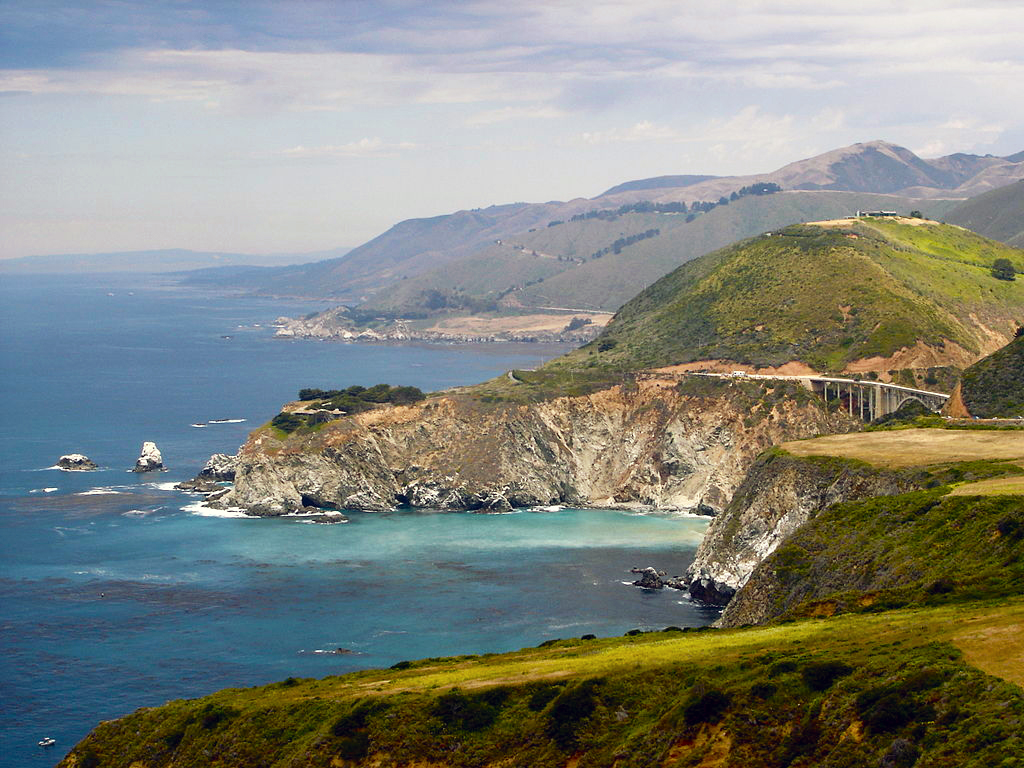
Jeff and his friend Keith Willis from back home in upstate New York would ride their motorcycle up to San Francisco for drinks and cigars at the Top of the Mark on Nob Hill, or down Highway 1 through Carmel-by-the-Sea to Nepenthe, 800 feet above the Pacific surf in Big Sur with its 40-mile view.  Like the rest of their young countrymen, they’d have been traveling along with a rollicking, yodeling doo-wop version of a traditional African tune that had hit #1 on the pop charts:

♫In the jungle, the mighty jungle, the lion sleeps tonight…


Hush, my darling, don’t fear my darling, the lion sleeps tonight.†

Nepenthe was no doubt an unbelievable scene for Jeff and Keith. Its breathtaking scenery and rich history in an incredibly laid-back atmosphere made it a destination for people from all over the world.Poets, artists, beats, lovers, dancers, musicians, as well as folks out for a memorable evening, all gathered there to relax and raise a glass to celebrate life in that most unforgettable place.And to dance the night away – among other dances, to ‘do the Twist’, the latest craze:

♫Yeah daddy is sleepin' and mama ain't around


We're gonna twisty twisty twisty
'Til we turn the house down.†

File:Big Sur June 2008.jpg

Big Sur Coastline

After a year in California paradise, it wasn’t surprising that Jeff’s letters home expressed no love lost for the Philippines.  Arriving at the 9th ASA (Army Security Agency) station at Clark Air Base in January of ’63, Jeff would work a full schedule translating intercepted North Vietnamese messages. Off duty it was short trips into Manila to prowl the bars or hit the racetrack; or head up to Baguio, a mountain retreat high above the heat of the lowlands. He and Keith would make shorter forays into Angeles City, a dusty town near the base offering the usual amusements and enticements to GIs.

There they could grab a bite, catch a movie, and especially go bar-hopping where they’d find music and girls. Keith would teach the B-girls steps of stateside dances like the Twist and the Mashed Potato, while Jeff was always welcome since he was often mistaken for a Spaniard. But Angeles City was a far cry from San Francisco or Big Sur.


Plaza Cafe, Angeles City, Philippines

In January of ’63, US advisors supported South Vietnamese forces in the Battle of Ap Bac, which went badly for the ARVN as well as the Americans. The South Vietnamese took heavy casualties, 83 killed and at least 100 wounded.  Of the 15 helicopters the US crews flew, only one escaped undamaged, while 5 were downed by enemy fire or completely destroyed with 3 Americans killed and 8 wounded. In the wake of defeat, US commanders took it as a bad sign that an anonymously composed Ballad of Ap Bac, sung to the tune of On Top of Old Smoky, echoing a battle report and lampooning the war effort, was making the rounds of the US billets.

On January two
We were called into Tan Hiep
We would never have gone there
If we had only knew
 
We were supporting the ARVNs
A group without guts
Attacking a village
Of straw covered huts
 
A ten copter mission
A hundred troop load
Three lifts were now over
A fourth on the road…
 
…A Huey returns now
To give them some aid
The VC’s are so accurate
They shot off a blade…
 
An armored battalion
Just stayed in a trance
One captain died trying
To make them advance…
 
…The paratroopers landed
A magnificent sight
There was hand to hand combat
But no VC’s in sight...
 
…When the news was reported
The ARVNs had won
The VC are laughing
Over their captured guns....

Colonel James Patterson “Bull” Durham, a pilot as well as singer-songwriter, collected many songs “in-country” written and performed by GIs, including himself.  A number of them were protest songs; others patriotic, and still others were about the general hardships and worries soldiers faced in a strange land in the midst of an undeclared no-win war. Some were parodies, some original, all were heartfelt.  One of Durham’s ditties was about the rescue helicopter affectionately known as the Jolly Green Giant or the Gooney Bird, painted all brown and green, the prettiest bird a downed pilot had ever seen:

♫I sit here alone in this tree
 Scared of 'Charlie' as I can be
Wish to the Lord that I could see Jolly Green.†

But it’s still 1963, and the Armed Forces Radio Service (AFRS) in the Philippines played music around the clock.  Needless to say, the in-country tunes were not on the playlists, but just imagine the reaction when the DJ announced an active duty Marine Corps group, ‘The Essex’, with a major million-selling #1 hit, Easier Said Than Done.  The writers said the beat was inspired by the sound of multiple teletype machines pounding out copy in the communications center.


♫….Tell him he’s the one.

 
Deep in my heart I know it,
But it’s so hard to show it
‘Cause it’s easier – easier said than done.†

Folk music was just beginning to gain widespread popularity in the early 60’s.  One of the earliest hits was Peter, Paul and Mary’s 500 Miles, which surely stirred deep feelings of nostalgia among the GIs far from home, friends, and family:
 
♫ Lord I'm one, Lord I'm two, Lord I'm three, Lord I'm four,
Lord I'm 500 miles from my home.
500 miles, 500 miles, 500 miles, 500 miles
Lord I'm five hundred miles from my home.
†
 
Then there was Fare Thee Well, based on an old English ballad, sung by Joan Baez, which offered a more accurate version of the distance between the Philippines and Jeff’s stateside hometown. Folk music-loving GIs might have remembered it from her debut album in 1960:
♫And fare thee well my own true love
 And farewell for a while.
I’m going away, but I’ll be back
If I go ten thousand miles.†
 
One thing the Philippines did have going for it that was reminiscent of California was good surf, especially during the monsoon season from October to January. The surf rock music craze was on, and the singers Jan and Dean made it to the #1 slot with Surf City:

♫Two girls for every boy
I bought a '30 Ford wagon and we call it a woody
(Surf City, here we come)
You know it's not very cherry, it's an oldie but a goody
(Surf City, here we come)
Well, it ain't got a back seat or a rear window
But it still gets me where I wanna go.†
 
Meanwhile, back in the States, protest songs were popping up, but not to be heard on AFRS.  One was Bob Dylan’s Masters of War, inspired by President Eisenhower’s Farewell Address warning of the military-industrial complex:
 
♫Come you masters of war
 You that build all the guns
 You that build the death planes
 You that build all the bombs
 You that hide behind walls
 You that hide behind desks
 I just want you to know
 I can see through your masks.†
 
Jeff’s first Vietnam assignment came in August ‘63 as the Buddhist self-immolations continued and the Vietnamese generals began planning the coup that would unseat the President of South Vietnam, ending with his assassination, but that’s a tale for another time. 

*Ballad of Ap Bac:   http://www.vhpa.org/stories/apbac.pdf
†  Links to music videos