Showing posts with label Clark Air Base. Show all posts

Wednesday, February 26, 2014

Back to the ‘World’ – Return from ‘Nam

For a year my brother, Jeff Sharlet, and I were on different ‘fronts’ of the global Cold War. It was 1963-64, and Jeff was soldiering in Vietnam while I was studying in Moscow. I had learned Russian for my sojourn to the Soviet Union. Jeff had been taught Vietnamese for his Southeast Asian tour.

He was a translator/interpreter in the semi-secret Army Security Agency (ASA) while I was grad student on the official US-USSR Cultural Exchange. We’d both been carefully vetted for our encounters with the Communist orbit – Jeff to assure his political loyalty since his work was highly classified.

Conversely for my program, any connection to the American intelligence community would have been a disqualifier. University authorities took great care to protect the integrity of the academic exchange. Jeff and I both passed muster and shipped out to our respective destinations.

In the Moscow State University dorms in the former Lenin Hills, I shared a suite of rooms with a Soviet law student. Jeff was billeted with five other GIs in a large field tent at a US military outpost in South Vietnam, a small base not far below the Demilitarized Zone (DMZ) and the border of Communist North Vietnam. As he wrote home, “we are completely out of contact with the outside world here.”


Jeff’s ‘accommodations’, South Vietnam, 1964

By the ‘60s, the Cold War between the superpowers was approaching mid-point with Washington leading the West, Moscow dominating the East. Fortunately it was not a head-to-head military confrontation; instead, the Cold War was waged in the realm of ideas, propaganda, covert action, and proxy wars in the Third World.

One of those proxy wars, the hottest one, was in Vietnam, a country split into North and South by the Geneva Accords following the French colonists’ defeat in 1954. Backed by the Soviets and Communist China, North Vietnam was supporting a low intensity guerrilla war in the south. The aim was to overthrow the Saigon government and unify Vietnam under the Communist flag.

Jeff was assigned to ASA’s Detachment J, 3rd Radio Research Unit (RRU) at a place called Phu Bai. His work included electronically eavesdropping on North Vietnamese Army communications as well as liaising with South Vietnamese commandos being infiltrated north through the DMZ and over the border.†

My academic tasks in the capital of the Soviet Union fell under the heading of Khrushchev’s slogan of ‘peaceful coexistence’, the idea that capitalist and socialist countries could coexist amicably and avoid fighting each other.

Implicit in the cultural exchange was the hope of mitigating international tensions through people-to-people programs. Hence, while I was researching Marxist legal theory for my PhD dissertation as well as studying Soviet law, my Soviet counterpart was studying at an American university.

In late spring ’64, Jeff and I had both coincidentally finished up our time abroad and were ready to head home to the States. For Jeff, it would be back to the ‘world’, as Vietnam GIs were wont to call the journey. The road back would be a long one for each of us, not just in sheer distance, but in the psychological gulfs we’d be navigating.

Reverse culture shock was just part of it – Jeff would be returning to college, quite a remove from the secrecy-shrouded atmosphere of the place  he was leaving, an area of scrub foliage and low sand dunes characterized by a National Security Agency (NSA) official as  ‘virtually a Viet Cong camp ground’.

The transition would be easier for me although, by definition in those days, an American living in Soviet society got used to being ‘watched’ and had to be careful what was said and to whom. Hence, returning to the States would be a radical change from living in a high vigilance, closed society, but that’s a story for the next post.

Jeff had gone to Asia, if not positive, at least open-minded about the US mission in Vietnam. But in the course of being involved in ill-conceived and fouled up political and military operations while simultaneously getting acquainted with ordinary Vietnamese and their culture, he had become increasingly disillusioned.†† On his return to the ‘world’, he’d have to sort out his thoughts and feelings about the war – what he had experienced ‘over there’.
Jeff’s road home began from one day to the next at the tiny base at Phu Bai. One day he was at work amidst the great heat and humidity in the working ‘uniform of the day’ – shirtless, shorts, and flip flops; the next day he was dressed in Class A’s heading for the airfield with his gear.
He was very glad to be leaving, writing presciently in a last letter just weeks before the infamous Gulf of Tonkin incident in August ‘64, “I hope I get out of the Army before anything blows up in Southeast Asia.”

Jeff caught a hop on a C-123, a large cargo plane that made two scheduled trips a day in and out of Phu Bai. The plane headed south toward Saigon, making a single stop on the coast of the South China Sea at Danang.


A C-123 taxiing for takeoff

Arriving at the military side of Saigon’s vast airport/air base, Jeff took a taxi over to nearby Davis Station, home to ASA’s 3rd RRU. He bunked there for his week’s leave in Saigon before moving on. He had many friends among the linguists (lingys) and cryptologists (crypts) there from his previous duty station in ’63 at Phu Lam, not far from the Davis base.

After a merry time drinking with good buddies at favorite bars and restaurants in Saigon, then known as the ‘Paris of the East’, it was time for the next leg of Jeff’s journey. That meant flying from Saigon to his home base, the 9th ASA battalion located at Clark Air Base in the Philippines.

In a kind of tradition when a lingy finished his tour and was headed home, his friends would see him off – Jeff’s friends from as far back as ’62 at the Army Language School (ALS) on the California coast did just that – among them John Buquoi, Harvey Kline, Dave Gustin and, if he was in town, Fred Baumann.

The drill was an informal farewell party in the upstairs lounge at the airport – tasty toasted ham and Swiss sandwiches with lots of Dijon mustard and, of course, plenty of ’33 beer, Vietnam’s cheap brew – before Jeff shoved off for the flight line.

‘Mileage’ post at Davis Station, HQ, ASA 3rd RRU

Back at Clark, a sprawling air base, Jeff had an exit physical at an Air Force clinic. His medical report was then sealed along with his basic military file and copies of final orders in a large brown envelope to be hand-carried back to the States.

Separation processing would take place stateside. In military jargon, one was ‘separated’ until a reserve obligation was completed a few years later and final discharge papers issued.
Again, another farewell party before take-off, this one with friends at the 9th ASA, Keith Willis and others. Jeff boarded a civilian 707, a World Airways charter under military contract, for the lift back to the States. The plane made the same stops as on the way over – Guam and Honolulu – finally touching down late at night at Travis Air Force Base north of San Francisco.

The flight was met by a military bus that took Jeff and the other GIs to a transient barracks on the base. Incoming traffic was apparently heavy because each GI was assigned to a particular bunk in an 8-man room for a specific time slot (about six hours). The following morning Jeff was shaken awake by the next GI assigned to that bunk.


He was directed to a bus for the short ride to Oakland Army Terminal where final out-processing took place. A quick breakfast at the mess hall there and he reported to the ‘Separation Processing’ facility located in a hangar.

At the front of the cavernous space, a podium and several tables were set up. Rows of wooden benches were provided for out-processing troops, a few hundred from bases all over the world. Jeff didn’t know anyone – he may have been the only ASA Vietnam GI in the group.

Separation was typically Army, slow and bureaucratic. At the podium a corporal would call out a name, directing the soldier to one of the tables or ‘processing stations’ – there were nearly a half dozen of them. Jeff would complete his business at one ‘station’ and be sent back to the benches to wait until he was called again – over and over.*

The stages of separation were:

Personnel/Records: Jeff handed over his thick brown envelope. A clerk reviewed the contents and various documents were signed.

Security: A military intelligence clerk briefed Jeff on the ASA secrecy commitment, to wit, if any classified information was divulged he would face federal prosecution, up to 10 years imprisonment, and a $10,000 fine, serious money in those days.

He was also warned against travel behind the Iron Curtain for five years, and there was one additional bizarre caution. If you were to undergo surgery involving general anesthesia, you were to notify ASA in advance so a de-briefer could be on hand in the event of ‘inappropriate disclosures’.

Equipment turn-in: A GI was expected to return all the uniforms issued him except the one he was wearing. A couple of privates unceremoniously dumped Jeff’s duffel bag on the floor and made an inventory of its contents. If any part of the original issue was missing, the cost would be deducted from the soldier’s final paycheck.

Physical Exam/Medical: Essentially blood and urine tests for which the out-processee was sent to an adjoining room.

Payroll: Jeff was given his final ASA paycheck as well as travel funds to cover the flight back to his hometown of record.

Finally at dusk after an all-day laborious process, the GIs were released and bussed to the San Francisco Airport to catch their flights. At the airport, Jeff cut out and headed into the city to revisit the town and see friends.

While in the Bay Area, John Sharlet, our cousin, who was then studying Russian at ALS down the coast in Monterey, came up to San Fran to meet Jeff for dinner. Back east the cousins had gone to prep school together, but hadn’t seen each other for several years.

A few months later in fall ’64, Jeff found himself back in school at Indiana University (IU), a college boy again, to finish his education. He threw himself into the coursework, eager to catch up on his life. Nonetheless he remained unsettled by memories of the war, but couldn’t say a word to anyone. Everything remained secret.

Jeff knew there were many other GIs deeply skeptical about the wisdom of US involvement in Vietnam. Once the war dramatically escalated the following spring of ‘65, the number of disaffected Vietnam GIs would eventually grow and become legion.

Five years later after returning from ‘Nam, Jeff took his secrets to an early grave, although not before founding the underground paper Vietnam GI, which became a rallying point for emerging GI opposition to the war.
___________________________________________

*I am indebted to John Buquoi, Jeff’s Vietnam buddy, for his help in reconstructing the ‘separation’ process.


Wednesday, August 15, 2012

Music To Wait For War By

The Pentagon recently decided the Vietnam War started in the first days of 1962. Many disagree with that date; some think it began earlier, some later.  But, coincidentally, January of 1962 was the start of Jeff Sharlet’s Vietnam War, the year he entered the Army Language School (ALS) and found himself in a year-long Vietnamese course.

The US mission which kicked off our war in Vietnam in ’62, according to the Pentagon, was ‘Operation Chopper’, the first time American military advisors were actively engaged in a major combat support role in South Vietnam. Over a thousand paratroopers of the Army of the Republic of Vietnam (ARVN) were flown in 82 helicopters to a stronghold of the guerrilla insurgents commonly known as the VC, Victor Charlie, just plain Charlie, or the Viet Cong – 10 miles west of Saigon.

But back at ALS as the battle raged in a faraway war in a country few could find on a map, Jeff and his fellow language students were just settling in to their 47-week program. Learning an unfamiliar Asian language by day, the guys were having a good time by night and on weekends. For many of the GI students from Eastern and Midwestern universities, the language school’s home at the Presidio of Monterey on the California coast was a magical place. High on a hill overlooking Monterey Bay with flower-bordered walks and endless sunny days, it was an exotic place ‘to go to school’.

Jeff and his friend Keith Willis from back home in upstate New York would ride their motorcycle up to San Francisco for drinks and cigars at the Top of the Mark on Nob Hill, or down Highway 1 through Carmel-by-the-Sea to Nepenthe, 800 feet above the Pacific surf in Big Sur with its 40-mile view.  Like the rest of their young countrymen, they’d have been traveling along with a rollicking, yodeling doo-wop version of a traditional African tune that had hit #1 on the pop charts:

In the jungle, the mighty jungle, the lion sleeps tonight…


Hush, my darling, don’t fear my darling, the lion sleeps tonight.

Nepenthe was no doubt an unbelievable scene for Jeff and Keith. Its breathtaking scenery and rich history in an incredibly laid-back atmosphere made it a destination for people from all over the world.Poets, artists, beats, lovers, dancers, musicians, as well as folks out for a memorable evening, all gathered there to relax and raise a glass to celebrate life in that most unforgettable place.And to dance the night away – among other dances, to ‘do the Twist’, the latest craze:

Yeah daddy is sleepin' and mama ain't around


We're gonna twisty twisty twisty
'Til we turn the house down.†

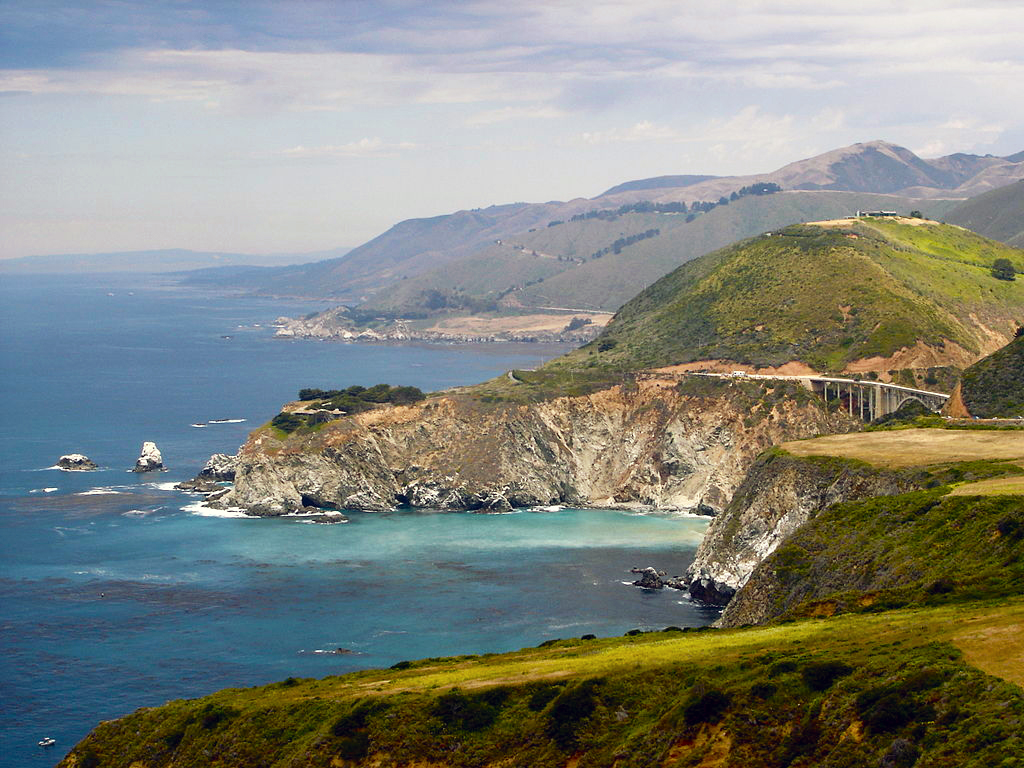
File:Big Sur June 2008.jpg

Big Sur Coastline

After a year in California paradise, it wasn’t surprising that Jeff’s letters home expressed no love lost for the Philippines.  Arriving at the 9th ASA (Army Security Agency) station at Clark Air Base in January of ’63, Jeff would work a full schedule translating intercepted North Vietnamese messages. Off duty it was short trips into Manila to prowl the bars or hit the racetrack; or head up to Baguio, a mountain retreat high above the heat of the lowlands. He and Keith would make shorter forays into Angeles City, a dusty town near the base offering the usual amusements and enticements to GIs.

There they could grab a bite, catch a movie, and especially go bar-hopping where they’d find music and girls. Keith would teach the B-girls steps of stateside dances like the Twist and the Mashed Potato, while Jeff was always welcome since he was often mistaken for a Spaniard. But Angeles City was a far cry from San Francisco or Big Sur.


Plaza Cafe, Angeles City, Philippines

In January of ’63, US advisors supported South Vietnamese forces in the Battle of Ap Bac, which went badly for the ARVN as well as the Americans. The South Vietnamese took heavy casualties, 83 killed and at least 100 wounded.  Of the 15 helicopters the US crews flew, only one escaped undamaged, while 5 were downed by enemy fire or completely destroyed with 3 Americans killed and 8 wounded. In the wake of defeat, US commanders took it as a bad sign that an anonymously composed Ballad of Ap Bac, sung to the tune of On Top of Old Smoky, echoing a battle report and lampooning the war effort, was making the rounds of the US billets.

On January two
We were called into Tan Hiep
We would never have gone there
If we had only knew
 
We were supporting the ARVNs
A group without guts
Attacking a village
Of straw covered huts
 
A ten copter mission
A hundred troop load
Three lifts were now over
A fourth on the road…
 
…A Huey returns now
To give them some aid
The VC’s are so accurate
They shot off a blade…
 
An armored battalion
Just stayed in a trance
One captain died trying
To make them advance…
 
…The paratroopers landed
A magnificent sight
There was hand to hand combat
But no VC’s in sight...
 
…When the news was reported
The ARVNs had won
The VC are laughing
Over their captured guns....

Colonel James Patterson “Bull” Durham, a pilot as well as singer-songwriter, collected many songs “in-country” written and performed by GIs, including himself.  A number of them were protest songs; others patriotic, and still others were about the general hardships and worries soldiers faced in a strange land in the midst of an undeclared no-win war. Some were parodies, some original, all were heartfelt.  One of Durham’s ditties was about the rescue helicopter affectionately known as the Jolly Green Giant or the Gooney Bird, painted all brown and green, the prettiest bird a downed pilot had ever seen:

♫I sit here alone in this tree
 Scared of 'Charlie' as I can be
Wish to the Lord that I could see Jolly Green.

But it’s still 1963, and the Armed Forces Radio Service (AFRS) in the Philippines played music around the clock.  Needless to say, the in-country tunes were not on the playlists, but just imagine the reaction when the DJ announced an active duty Marine Corps group, ‘The Essex’, with a major million-selling #1 hit, Easier Said Than Done.  The writers said the beat was inspired by the sound of multiple teletype machines pounding out copy in the communications center.


♫….Tell him he’s the one.

 
Deep in my heart I know it,
But it’s so hard to show it
‘Cause it’s easier – easier said than done.

Folk music was just beginning to gain widespread popularity in the early 60’s.  One of the earliest hits was Peter, Paul and Mary’s 500 Miles, which surely stirred deep feelings of nostalgia among the GIs far from home, friends, and family:
 
Lord I'm one, Lord I'm two, Lord I'm three, Lord I'm four,
Lord I'm 500 miles from my home.
500 miles, 500 miles, 500 miles, 500 miles
Lord I'm five hundred miles from my home.
 
Then there was Fare Thee Well, based on an old English ballad, sung by Joan Baez, which offered a more accurate version of the distance between the Philippines and Jeff’s stateside hometown. Folk music-loving GIs might have remembered it from her debut album in 1960:
And fare thee well my own true love
 And farewell for a while.
I’m going away, but I’ll be back
If I go ten thousand miles.
 
One thing the Philippines did have going for it that was reminiscent of California was good surf, especially during the monsoon season from October to January. The surf rock music craze was on, and the singers Jan and Dean made it to the #1 slot with Surf City:

Two girls for every boy
I bought a '30 Ford wagon and we call it a woody
(Surf City, here we come)
You know it's not very cherry, it's an oldie but a goody
(Surf City, here we come)
Well, it ain't got a back seat or a rear window
But it still gets me where I wanna go.
 
Meanwhile, back in the States, protest songs were popping up, but not to be heard on AFRS.  One was Bob Dylan’s Masters of War, inspired by President Eisenhower’s Farewell Address warning of the military-industrial complex:
 
♫Come you masters of war
 You that build all the guns
 You that build the death planes
 You that build all the bombs
 You that hide behind walls
 You that hide behind desks
 I just want you to know
 I can see through your masks.
 
Jeff’s first Vietnam assignment came in August ‘63 as the Buddhist self-immolations continued and the Vietnamese generals began planning the coup that would unseat the President of South Vietnam, ending with his assassination, but that’s a tale for another time. 

*Ballad of Ap Bac:   http://www.vhpa.org/stories/apbac.pdf
  Links to music videos


Wednesday, November 23, 2011

Moscow – Thanksgiving ‘63

November ’63 was a month of assassinations, Diem in Saigon, Kennedy in Dallas. News of the first ran for a few weeks in the world press, soon swamped by the more dramatic story of the second, which continues to this day in collective memory.

Brother Jeff Sharlet was peripherally involved in events leading up to the assassination of President Diem of South Vietnam (SVN), while I bore distant witness to the violent death of President Kennedy (JFK) many thousands of miles away. Until two weeks before Diem’s demise in a military coup, Jeff was based in the Saigon area spying on the South Vietnamese generals planning the coup; JFK had given the generals the ‘green light’, but wanted to make sure he had behind-the-scenes information. My mission in Moscow was much more benign – a PhD student from Indiana University-Bloomington on the US-USSR Cultural Exchange – I was researching my dissertation on Soviet jurisprudence. At the moment JFK was shot on a Texas street, I was hanging pictures in my dorm room at Moscow State University (MGU) in the Lenin Hills outside the USSR capital.

Except that we were brothers in far corners of the world, I didn’t give much thought to the low-intensity guerrilla war in former French Indochina, and I doubt that Moscow was very much on Jeff’s mind as he worked his equipment to monitor the generals’ conversations. News of the larger world was not abundant in either locale. In Saigon, Jeff could read the official military newspaper, Stars and Stripes and listen to Armed Forces Radio, mostly country music, while my main sources of information were the censored Soviet press and Radio Moscow. Nor was correspondence with family and friends timely; letters took 10 days to two weeks to reach their destination. In effect, during the fall of ’63, Jeff and I each lived in a relatively isolated, self-contained world.

Then on October 31st, a Yale professor was arrested in downtown Moscow by the Soviet secret police, aka KGB, charged with espionage. News appeared the next day in a brief notice in the official Soviet paper Izvestiia. The American exchange students were jolted out of their routines as word of the arrest got around. The professor, Frederick Barghoorn, was known by reputation to all, and it was implausible that he had come to Moscow for anything other than scholarly purposes.

While the arrest was buried at the bottom of a column, the coup in Saigon the next day, November 1st, was the big front page news story in the same issue; Communist North Vietnam, backer of the Viet Cong (VC) insurgency in SVN, was a close ally of the USSR. The following day brought the even more dramatic news that Diem had been assassinated. None of us missed the news from Southeast Asia, but we were distracted and worried about Professor Barghoorn’s arrest and its implications for the exchange program. After several days of Vietnam coverage, the front pages of Pravda and Izvestiia again returned to Soviet high politics and economic plan fulfillment. Meanwhile, official silence had descended upon the Yale professor.

US Ambassador Foy Kohler lodged a vigorous protest with the Ministry of Foreign Affairs demanding release of the American academic. In Washington the State Dept avowed that the professor was a private citizen on a scholarly research trip. However, all appeals were to no avail as the prisoner continued to languish in Lubyanka prison not far from Red Square. A week passed, and another brief notice appeared in the press that the scholar would be bound over for trial. At the end of the second week of Barghoorn’s incarceration, at what would be his last press conference on November 14th, JFK, in a rare presidential intervention on an individual case, called Professor Barghoorn’s arrest unjustified, emphatically stated that he was not on an intelligence mission, and called for his swift release.

Another day passed with Barghoorn still locked up, and our group was notified to prepare for immediate departure from the Soviet Union. To everyone’s enormous relief, especially the prisoner’s, Frederick Barghoorn was abruptly released on November 16th, declared persona non grata, and expelled from the Soviet Union. The crisis that had kept us on edge for weeks had been happily resolved, and full attention once again returned to research work. Life returned to normal or as ‘normal’ as it would ever get in Moscow, where even the simplest daily task required careful planning and much time waiting in lines in that scarcity-ridden society. It was like living in a slow motion film. Later we would learn that the FBI had nabbed a Soviet spy, and Barghoorn had been seized as a high value hostage for exchange purposes.

Meanwhile back at his base in the PI, Jeff found himself the unwanted object of attention by the military hierarchy from the Pentagon down to his platoon commander (CO). While in Vietnam, he neglected to write home. Our mother, knowing he had left for the war zone, became worried and called their Congressman, who in turn forwarded her inquiry to the Army’s Adjutant General and on down the command structure. Word went back up the chain of command that Jeff was safe, but obviously, since he was then in the midst of a clandestine operation to overthrow the head of state of a sovereign country, the Army wasn’t sharing details. When Jeff returned from Saigon, his perturbed CO sat him down in the office to write a letter to his parents. Otherwise, Jeff slipped back into his regular duties reading North Vietnamese military intercepts in a windowless building surrounded by heavy security. For both of us in our respective bubbles, Thanksgiving abroad was just over a week ahead.


Jeff’s barracks on Clark Air Force Base, Philippines

Those of us assigned to the law school were hustling to catch up on time lost during the Barghoorn crisis since we all intended taking a couple of days off for the American holiday. Ambassador Kohler and his wife had invited the 25 or so of us to Thanksgiving dinner at their official residence. For a change, a great meal beckoned after months of bland university food. The week before the holiday a visiting US graphic arts exhibition opened in Moscow under auspices of the Cultural Exchange. I heard it was thronged by Soviet visitors anxious to see Western art, so on my trip to the embassy that week I picked up prints of some of the art works to decorate my bare bones Soviet dorm room.

Friday evening, the 22nd of November, with law school classes over for the week, I borrowed a tack hammer and was hanging the graphic prints on my wall. I was feeling pretty good – Soviet colleagues were welcoming, research was going well, and my spoken Russian had greatly improved. It was just after 8:30 Moscow time when my friend Al Lichtenstein burst into the room, gasping, “The President’s been shot.” Radio Moscow had interrupted its evening classical music program to announce the shocking news from Dallas shortly after noon that day. Al was a historian living on the other side of the huge dorm complex, the size of a college campus, and upon hearing the terrible news had raced over to tell me. We quickly turned on my room radio; it was nearing the evening news hour, and Radio Moscow had switched to very dark funereal music. At 9 o’clock the news reader recapped the shooting in a somber voice, then broke off his text a few minutes later to announce that word had just come from the Dallas hospital, "The President of the United States of America, John F. Kennedy, is dead."

O Captain! My Captain! rise up and hear the bells;
Rise up—for you the flag is flung—for you the bugle trills;
For you bouquets and ribbon’d wreaths—for you the shores a-crowding;
---
It is some dream that on the deck,
You’ve fallen cold and dead.
                                                           ~Walt Whitman

While Al ran off to spread the word I sat on my narrow bed too shocked to think. Grief overcame me. With his flair, style, and charisma, JFK had been an extraordinarily popular president, especially for my generation just making its way in the world. There was a knock at my door. I pulled myself together; it was a delegation of Soviet law students, my floor mates, who had heard the news and come by to formally and very sincerely – Russians are soulful people – tender their condolences to me as an American amongst them. We stood there, our heads down in the dimly lit hall. One of them very politely asked me how such a thing could happen in America. At that point I assumed that it was a rightwing assassination and described to them the off-the-wall right-wingers in the States, the John Birch Society, the Minutemen, and others. They nodded gravely; that was a political explanation they could readily understand.

While standing outside my room we suddenly heard a commotion in the common area down the hall. Russian curses and indignant shouts filled the air. We rushed down where a large group of Russian students were milling around the bulletin board. A spokesman angrily related the cause. The third floor below in our wing of the dorm was occupied by a large contingent of North Vietnamese students. Right after news of Kennedy’s death broke, the North Vietnamese had drawn up a large poster praising the assassination and condemning the United States and posted it on our bulletin board. Upon reading it, the Russians in a fury ripped it down, tore it to shreds, and were shouting curses at the culprits who had wisely fled the scene – the Russian guys were twice their size. The Russians, all speaking at once, apologized to me, the only American present, for the outrageous behavior.

That weekend was a blur. On Saturday, Izvestiia ran a front page story with a black-bordered photo of JFK along with official statements of condolence. Lee Harvey Oswald, an ex-Marine sharpshooter, had been arrested. Suspicion fell on Moscow once it was learned that he identified with the pro-Cuban left in the US and had lived for a time in the USSR with his Soviet wife. On Sunday Oswald was shot dead at point-blank range in the police station; the event was witnessed on live television by millions, adding to the chaos. His assailant was Jack Ruby, a shady nightclub operator.

The state funeral for the President was scheduled for Monday, November 25th. The embassy made arrangements for the American students to be invited to the private quarters of various Foreign Service Officers in the US diplomatic residence where we all watched a very emotional half hour of the long funeral on Soviet television. The Soviets had agreed to permit the first Telstar transmission for the occasion, but after 30 minutes the satellite moved out of range. I vividly remember the riderless black horse behind the caisson on Pennsylvania Avenue. As we sat in the comfort of an American living room far from our spartan dorms, we forgot for the moment that we were a long way from home.


Jacqueline Kennedy receives the flag that covered the president’s casket

The following day I went to the law school to attend class though my heart wasn’t in it. Upon entering the large common office of the Jurisprudence faculty, all present rose. With the chairman Professor Doctor Andrei Ivanovich Denisov (who was also my adviser) in the lead, they all came forward to offer condolences, bowing their heads slightly as they shook hands with me, as is Russian custom in the face of death. I was deeply touched by the feelings of the Russians that terrible week.

As Thanksgiving Day approached, we all assumed that the dinner would be off. On the contrary, the ambassador sent word that it was more important than ever for the Americans in Moscow to assemble on our national holiday. On Thursday I donned Sunday best with a suitably dark tie and, still with heavy heart, made my way with friends into Moscow. It was my first visit to the ambassador’s residence, Spaso House, a magnificent early 20th century structure built by a wealthy Russian. Shortly after the US diplomatically recognized the Soviet regime in 1933, the house was acquired as home to American envoys during their time in the USSR.


Spaso House

We passed through the front gardens to the entrance portico. Inside we were ushered into a beautifully appointed, high-ceilinged dining room with very large windows. We were seated at tables of four or five with fresh floral arrangements on heavy white linen tablecloths. Ambassador and Mrs. Kohler sat at a table near the windows with the most senior American scholar in Moscow as their dinner companion. On a small table nearby sat a silver framed picture of President Kennedy with a black ribbon across a top corner and the late President’s personal inscription to Foy Kohler below. As a senior State Department official in ‘61, he had played a significant role in helping JFK peacefully resolve the tensions in Berlin over the East Germans’ surprise erection of the Berlin Wall.

Before the dinner was served, the ambassador rose and spoke to our small group softly and warmly of his personal memories of JFK, of the loss he shared with us, and of the need for all of us to move on. It was a magical moment, we all felt a lifting of our seemingly limitless grief, and soon conversations blossomed around the room as spirits revived. I wish I could say that Jeff and buddies had also experienced such a healing moment, but that was not to be.  When the terrible news arrived from Dallas, it was already after noon on the following day, Saturday, November 23rd, in the Philippine Islands.

Meanwhile, as soon as the president was struck by bullets, the Pentagon flashed a full alert to all US bases worldwide. On the aircraft carrier Saratoga, when the captain piped the announcement of the President’s assassination to the ship’s complement, a sailor wrote that 4000 men on the ship were stunned into silence. At bases with artillery units the next day, per standing orders following the death of a president, one gun was fired every half hour from reveille to retreat.

Monday, the day of the state funeral, November 25th, had been declared a National Day of Mourning. Per protocol, troops at bases in Europe, North Africa, and the Middle East held parades in memory of the fallen leader, while artillery bases fired 21-gun salutes beginning at noon. At US bases in Asia, it was to be simply a stand-down day of personal mourning with neither drills nor ceremonies – but not in Jeff’s unit. In the moronic military tradition of keeping the troops busy, a general ordered a full field inspection, angering both officers and enlisted men alike on that solemn occasion.


Wednesday, August 3, 2011

Waiting for War

After graduating from the Army Language School on the California coast, Jeff Sharlet was ordered to Clark Air Base in the Philippine Islands (PI). He couldn’t have known that the Administration was quietly stockpiling lingys for the conflict in Vietnam, a larger war they must have foreseen when they began escalating US involvement shortly after John F. Kennedy’s Inauguration, January 1961.

For Vietnamese linguists, lingys for short, the Philippines was the waiting room for the guerrilla war underway in South Vietnam across the South China Sea. While they waited, theirs was the life of college boys on extended vacation in the South Pacific.

In early ’63, Jeff set off for the Far East via Honolulu from Travis Air Base north of San Francisco. Enroute he wrote home, “Hawaii is beautiful and warm. I’m on a Super Constellation. It will take 30 hours to get to the Philippines. The South Pacific looks enchanting.” Arriving at Clark, he reported to the 9th ASA, an Army Security Agency Field Station. There he did top secret, highly classified work, discreetly tucked away in a corner of the air base. Jeff’s first letters reflected his initial enthusiasm.

He described the base as “a little piece of America” with the pool “across the street, tennis courts … nearby, and the enlisted men’s (EM) open mess, called the Coconut Grove … next door.” He wrote of the pop culture ambiance of the place: 
You hear music everywhere on base. It’s from Armed Forces Radio (AFR) which we get on our transistors, and … through speakers in the clubs and rec areas. It’s a strange combination of Country Western and Rock ‘n Roll, everything from Your Cheating Heart and Oklahoma Hills to Little Richard’s Good Golly, Miss Molly and lots of Ray Charles.
When tears come down like falling rain,
You'll toss around and call my name,
You'll walk the floor the way I do,
Your cheatin' heart, will tell on you...*

At first the work was interesting. Jeff was on the late night shift so days and evenings were his. Just before midnight, he’d catch the ASA shuttle to the Ops building, a windowless concrete structure in a heavily-guarded, and barbed wire enclosure in the middle of an enormous field. At night, the perimeters of Ops were brightly illuminated by large flood lights so the sentries could see anyone approaching at a distance.

Although the work went on 24/7, the 9th ASA was doubly over strength in Viet lingys, so Jeff and buddies had plenty of time on their hands. Days were spent lounging at the pool, evenings drinking at the Airmen’s Club on base. Or they go into the town outside the base, Angeles City, which he described as “something out of Susie Wong’s world, just like those Far Eastern army towns you read about in war novels.” The place was a huge collection of bars with American names like Plaza Bar, Skylight, Keyhole, and Jeff added, “whores, beds, Jeepney drivers, horse and buggy conveyances, and the most poverty stricken people I have ever seen."


        Jeff—tough life in the Philippines                                  Downtown Angeles City

Otherwise, life in the islands was good. The military facilitated leave-visits all over Asia, although there were restrictions for ASA troops given the sensitive nature of their work. While there were daily and space-available military flights to various exotic destinations, as well as leave-ships to Hong Kong several times a year, ASA personnel weren’t allowed to go to Indonesia, Burma, Cambodia, or even Australia because they’d have to fly over rebel-held parts of Borneo. But in the PI Jeff and friends enjoyed weekend sojourns at white sandy beaches on the South China Sea, and trips to Baguio, a cool mountain resort away from the heat of the plains, as well as visits to Manila just 65 miles from Clark. The PI capital held many attractions, including clubbing with his buddy Peyton Bryan, or a day at the racetrack with an old chum from school days in upstate New York, Keith Willis.


Road to Baguio, Philippine Islands

But as the months wore on, the secret work became repetitious and less interesting, and the drinking routine at the base club or in Angeles City tiresome. Late spring ’63 as the rainy season approached, Jeff was finding life increasingly boring and despaired that “My only useful activity is singing in the Clark Glee Club.” Then came the heavy rains turning the monotonous brown of the cane fields and rice paddies green, and he began to spend more time reading. I had been sending him paperback novels and books on Southeast Asian politics.

His letters home showed more awareness of the political news from the States, and of the situation in his part of the world. Commenting on violence against Negroes seeking civil rights in the South, he wrote: “I think about all the hypocrites who say we need gradualism and moderation. I say we need agitation. Filipinos ask about these incidents and there is little you can say.” By summer he was reading a great deal on the politics of Southeast Asia, pondering, as Jeff put it, “a way of offsetting Chinese Communist influence and keeping the states [of the region] non-communist,” when the Vietnam War abruptly interrupted.

Late August ’63 in a hurried note from the flight line, Clark Air Base, Luzon, PI, Jeff wrote briefly and cryptically: “I’m leaving for Vietnam for…some ‘field work’.” But that’s another story.

*”Your Cheating Heart”, written by Hank Williams, 1952